


In the rapidly evolving world of photography, film photography remains a timeless craft that offers unique benefits to photographers. Here are five reasons why delving into film photography can enhance your skills and broaden your artistic horizons.
1. Equipment Diversity:
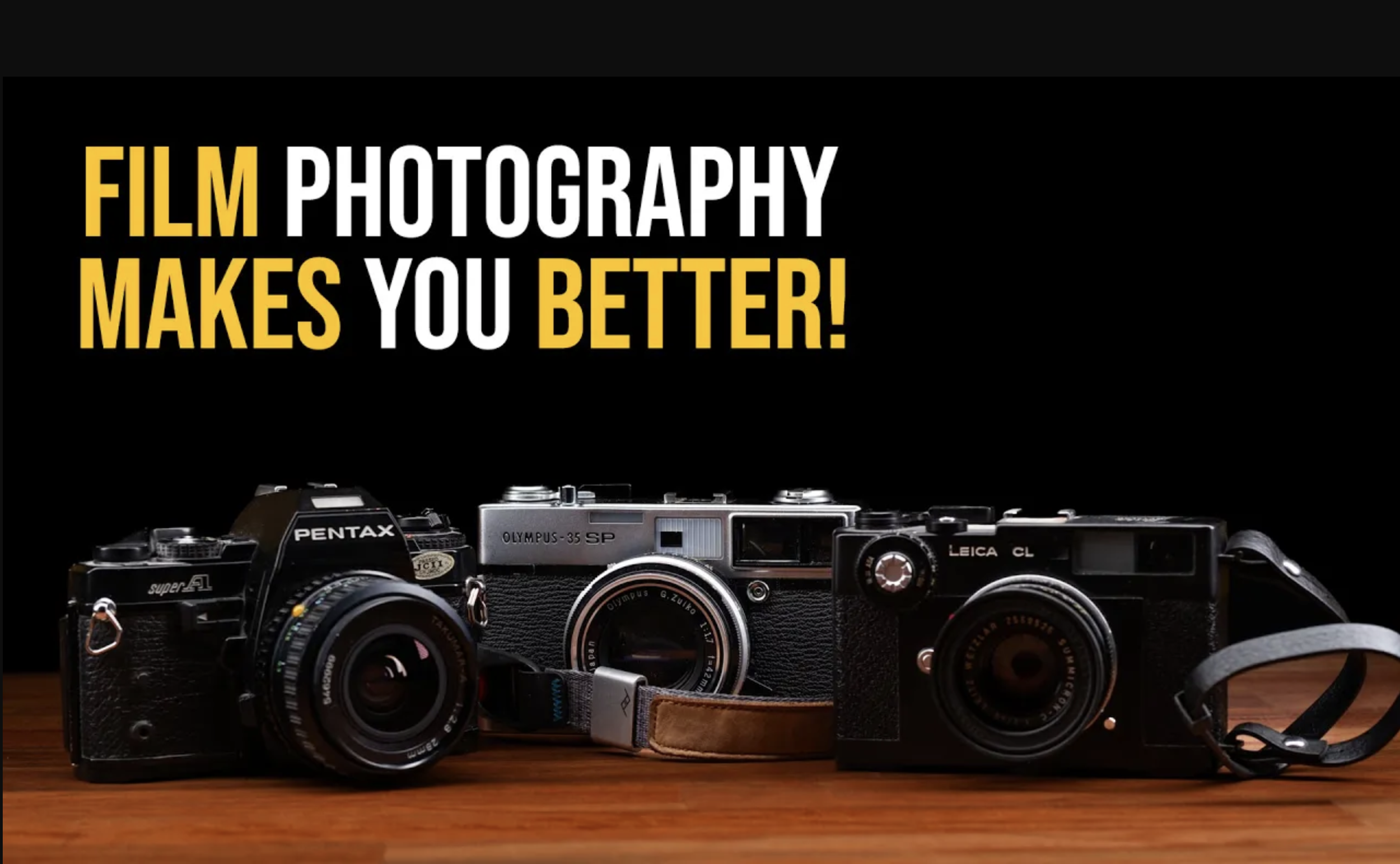
The world of film photography presents an array of equipment choices, from vintage film cameras at bargain prices to professional SLRs and compact cameras. Exploring these diverse options can enhance your understanding of different photographic tools and techniques. Although gear isn’t everything, the experience gained from working with various types of cameras is invaluable.
2. Exploring Different Film Stocks:
Film photography isn’t just about the camera; it’s also about the film. Each type offers a unique character and aesthetic with options ranging from color to black and white, slide film, and instant film. Experimenting with different films can inspire new styles and perspectives, though it’s worth noting that films and development can be costly.
3. Timeless Aesthetic:
There’s something about film photography that digital simulations can’t replicate. Film photos’ nostalgic and timeless quality, especially black and white, creates images that resonate across generations. These photos often capture more than just a moment; they evoke a sense of enduring relevance.
4. Surprise and Uncertainty:
Film photography incorporates elements of surprise and uncertainty, making the process more engaging and educational. The simplicity of most film cameras, often limited to basic controls, encourages photographers to be more present and focused on their surroundings.
5. Slower, More Thoughtful Process:
Film photography naturally imposes a slower, more deliberate approach. This restriction can be a powerful tool, fostering creativity and problem-solving. It teaches photographers to be more thoughtful, potentially producing more meaningful and impactful images.
6. Enhanced Attention to Composition and Detail:
Film photography inherently encourages a more meticulous approach to framing and composing each shot. Since film rolls are limited in the number of exposures they offer, photographers learn to be more discerning about what they capture. This limitation fosters a heightened awareness of composition, lighting, and subject matter.
Unlike digital photography, where one can take numerous shots and select the best later, the film requires careful consideration of each frame. This process cultivates a deeper understanding of photographic elements such as the rule of thirds, leading lines, framing, and perspective. Over time, this careful consideration becomes second nature, greatly enhancing the photographer’s ability to capture compelling images, even in fast-paced or challenging situations.
Additionally, the tactile experience of manually adjusting focus, aperture, and shutter speed on a film camera enhances the photographer’s connection to the camera as a tool, leading to a more intuitive understanding of how various settings affect the final image. This hands-on experience with the mechanics of photography can be incredibly beneficial, especially in an era where digital cameras often automate these processes.
By integrating the lessons learned from film photography into their broader practice, photographers can develop a more refined and thoughtful approach to their craft, regardless of their working medium.
Conclusion:
Whether you’re a seasoned photographer or just starting, film photography offers unique experiences and learning opportunities. It encourages a different approach to capturing images that might change how you perceive and engage with photography. Have you tried film photography, or are you planning to?
Share your experiences and thoughts in the comments below!
More about this topic in my video: