I had a chance to test the new Luminar AI. It is still in beta. Luminar AI a new software from Skylum Software. The whole philosophy of Luminar AI is that it will help to start the editing. Like Skylum said in one of their webinars many photographers have a very hard time knowing where to start. Luminar AI and its templates are the answer.
Luminar Ai will analyze the images and give suggestions on where to start. It will give a few template options to start. The good thing is that every template is editable. So that you as the photographer can adjust the settings that were used in a particular template.
If you are interested in Luminar AI. There more info on Skylum Website.
I have made a video where I show a few of the things that Luminar AI can do. I think it is quite an interesting software. I am very interested to see where it is going.
Disclaimer: Some of the links might be Affiliate Links. If you use those links and buy something I will get a small commission. You do not pay any extra.
Artificial intelligence has been a big thing in image editing in recent years. Adobe has had its Sensei for a few years, Topaz Labs has a whole set of AI-driven software, Skylum Software is launching Luminar AI in the near future. DxO Labs upgraded the Photolab to version 4 and added an improved AI-driven noise reduction.
AI is a good thing.
In general, I think AI is a good thing what it comes to image editing. It will make it easier and faster. I will get back to this, but before that, I will say a few words about noise reduction which I think is the best part of AI in image editing.
Noise is something most photographers do not like. It can be a thing that ruins an image. Using a high ISO will introduce some noise. Also if an image is a bit under-exposed for some reason there will be noise. Especially if the underexposed image is brightened by increasing the exposure.
Noise Reduction with AI
AI-driven noise reduction is definitely a good thing. The quality has gotten better and better. AI can remove noise very well. I have used Topaz Labs DeNoise AI. I have been very happy with the results. If you want to hear more about what I think about Topaz Labs DeNoise AI watch this video. Also Adobe has AI-driven noise reduction in the making. It is a part of their Neural Filters which I will address a bit later.
Just a few days ago DxO Labs launched version 4 of its DxO PhotoLab. It has three different noise reduction methods, HQ, PRIME, and the newest DeepPRIME. DxO PhotoLab 4 Elite version works as a plug-in for Lightroom. I have used DxO Photolab in the past. Now that the DeepPRIME noise reduction has been improved I will use it a bit more.
I have not tested DxO PhotoLab 4 against Topaz DeNoise AI what comes to noise reduction. Both seem to work great and I will make a video where I compare them after I have tested DxO PhotoLab 4 a bit more. The first results indicate that it is better than Topaz DeNoise AI.
AI can be used for a lot more than just noise reduction. Richard Harrington from Skylum Software said that Luminar AI will address a common problem. Quite a few do not know where to start when editing images. Luminar AI can give a good starting point for that. The same thing is with DxO PhotoLab 4. You can choose which correction you want the AI to do as default. Of course, everything can be adjusted, but they give you a starting point.
I can understand that problem. I have been lecturing and teaching photography and image editing for many years. It is for many a real challenge to know what should they do with their image. Where to start. The main thing is first of course to understand how we look at images. What is the thing we see first in an image? Understanding that is very important. That will help you to edit.
The problem with this is that it will give a general starting point based on what the AI has learned to be a good image. AI has based its view on millions of images. Eventually, this will lead to images that look all alike. AI thinks that landscape photographs should look a certain way.
Will this affect our thinking about what is a good image. maybe it will. That has happened with Instagram. Those who use it most likely know what kind of images gets likes. I am not referring to those that show what I have eaten. Those likes come from close friends. I am talking about those images that have some photographic value. Images that can be appealing to a wider audience. If this happens with AI-driven image editing I do not think it is a good thing. This is a common problem with any technology. If it is there to help you to achieve the goals you have and in this case the photograph you like, then it is a good thing. If you let the AI decide for you then it is not totally your image.
What about Adobe and Sensei?
What about Adobe’s AI, Sensei how they call it. It has been quite helpful in video editing. A few examples are content-aware cropping and content-aware fill. In the latest version of After Effects, the Rotobrush 2 makes the green screen almost obsolete. In the latest version of Photoshop that was launch in Adobe Max has Neural Filters.
Neural Filter includes Face Cleanup, Sky Replacement, Super Zoom, etc. Some of the Neural Filters are really useful. The Super Zoom lets you crop an image without losing any pixels. I did a quick test and it seems to work really well. The cropped version has a very good image quality. That is something that needs to be looked into some more. Sky Replacement is a good tool if you do a lot of composite images. It will make it so much faster to replace the sky. But in general use for your images, I do not think it is a tool that should be used. It is more for advertisement and art.
Is AI the future of Image Editing?
What about the question I asked in the title of this blogpost. Is AI the future of Image Editing? Simple answer, yes it is.
What is the direction I would like the AI to go? As I wrote, now the way it is that AI learns from a vast amount of images. In the future, I would love to have AI that learns from my images, from my way of editing. It should learn what I like. One example is contrast, color vibrance, etc. AI should learn from my preferences on those and some other things. Then it would give me a better starting point for my edits.
What do you think about AI-driven image editing? Good or bad?
Disclaimer: Some of the links are affiliate links. If you click those and buy something I do get a small commission. You do not pay any extra.
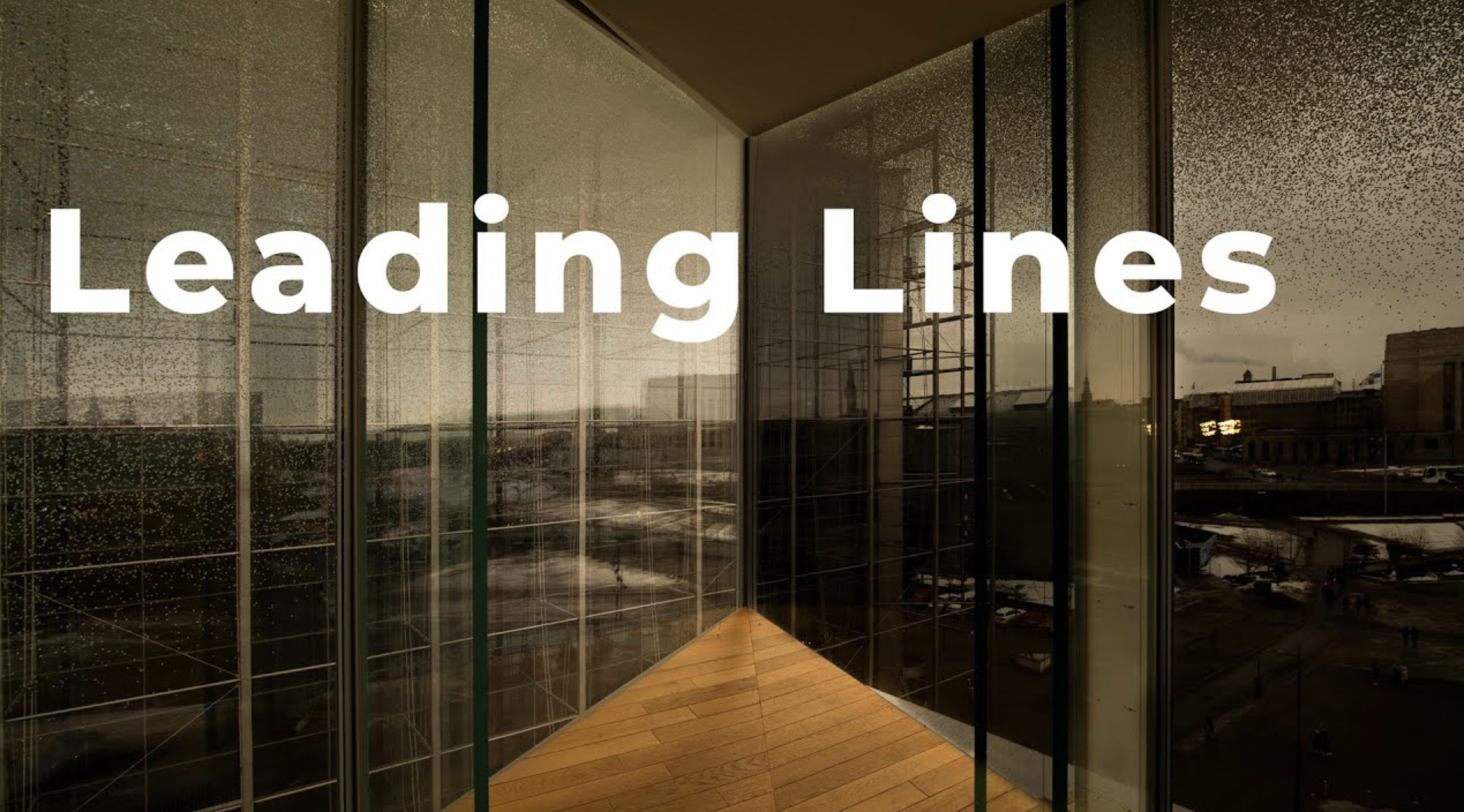
Leading lines is a very powerful way of making a composition. It will draw the viewer’s eye where you want it in the image. Usually, the effect is stronger if you use a wide-angle lens. In the video, I also talk about if there is a difference between a straight leading line or a path? What about the subject? Is a subject important in the end of the lines?
In the video below I will answer these questions. Watch the video and take part and send e an image for the feed back. Instruction how below the video.
Instruction for the challenge:
Make an image that meets the assignment I gave in the video above. You can use any gear that you want.
Send the image using this link. It will take you to a Google Form. From there you can send your image. You need to be signed in to Google.
Submitting an image to my feedback session you will grant me the right to show and critic the image during the Live Stream. If you submit an image it does not mean that it will be given feedback. I try to give critic to everyone, but if there are a lot of images I will the best ones. Also if the subject is inappropriate I will not show the image or give feedback. All images and other info will be deleted after the Live Stream.
This is important: Make sure that you have all the rights to the image you submit.
Below is the Live Stream where I gave feedback to the images.