Getting accurate color in photography is sometimes very crucial. Of course, in every day shooting it might not that important. Macro, landscape, and portrait photography might genres where color accuracy is important.
You want the skin tones and colors of products to be perfect. In the linked video I will give you four tips about colors and how to get them right.
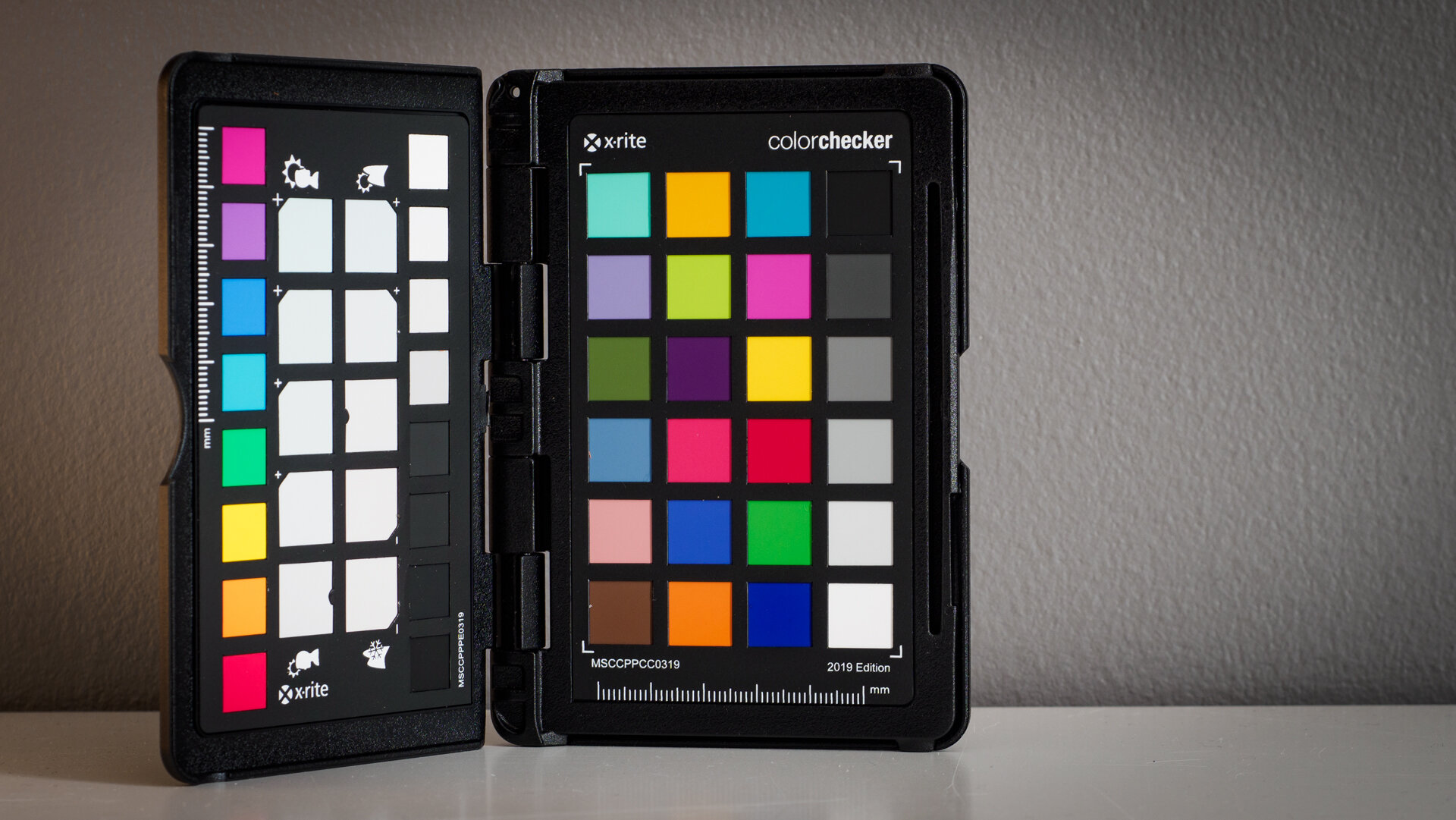
Color Checker
X-Rite Color Checker Passport 2
Using a color checker and calibrating your camera is actually quite easy. What you need is a Color Checker. I have used X-Rite Color Checker Passport 2 and Passport Video. With these two cards, I can be sure that my colors are correct. the way they actually are.
The workflow
The workflow is quite easy. You just include the Color Checker in the first photograph. The most important thing is to have the same light as you will have on your photograph. This way you will get the best results. The instructions on how to proceed from that can found from the video.
Olympus has just released a new development announcement. Olympus E-M1 MKIII and E-M1 X will get Apple ProRes RAW by the end of this year. The recorder that will be able to record Apple ProRes RAW with these cameras is Atomos Ninja V.
What is ProRes RAW?
In short ProRes RAW is quite a similar idea as raw formats in photos. The quality is the best the sensor can capture. There are Apple ProRes RAW capable cameras where for example white balance or ISO that will be used can be chosen after the shoot. ProRes RAW is developed by Apple and if you are interested in reading more about the Apple ProRes RAW there is a white paper (.pdf-file) released by Apple.
Another similar raw format for video is for example Blackmagic RAW.
Apple ProRes RAW features
It is not totally clear what features ProRes RAW from Olympus E-M1 MKIII and E-M1X will be available. Their press release about it says:
“This lends greater flexibility to professional video production post-processing tasks such as adjusting exposure and color grading recorded footage.”
This is promising and will make Olympus E-M1 MKIII and E-M1X even better video cameras than they are now.
Combined with IBIS and great AF
I am very excited about this new development. ProRes RAW combined with Olympus great IBIS and very good AF in the video will make E-M1 MKIII and E-M1X very interesting video cameras. The quality of the footage is excellent as it is now. Lack of some features like vectorscopes etc. are things that I would really want to see in an Olympus body. Apple ProRes RAW will make some of that up. It will interesting to see the final version when it is out later this year.
Final Cut Pro X is the best option for editing, at least for now.
If I have understood correctly Apple Final Cut Pro X is the best editing software right now that can handle ProRes RAW. Adobe Premiere and DaVinci Resolve can also handle ProRes RAW. You need to download video format 2.1.1 to later from Apple in order to be able to use Premiere Pro for editing ProRes RAW format. Let’s see if I need to switch to Final Cut Pro X when the codec is available in Olympus cameras.
All in all very good move from Olympus. In a recent interview with JIP (the company that will buy Olympus imaging business) said: “JIP also plans to focus on the “video business” which so far Olympus hasn’t really focused on: “We are considering various markets such as consumer products specialized for video and business such as surveillance cameras” (from m43rumors.com)
Let’s hope that this means new features in video specs for new Olympus cameras.
disclaimer: Some of the links might be affiliate links. If you buy something using these links I will get a small commission. You do not pay any extra. It is a win-win situation.
Olympus launched about a month and a half ago their much-waited lens the M.Zuiko 100-400mm f5.0 -6.3 telezoom lens. I have heard that it is very popular. There is still a waiting list. That is good news.
I have had a chance to test it a couple of times. I have linked two videos about at the end of this blogpost. M.Zuiko 100-400mm is the longest lens from Olympus at the moment. The upcoming lens the M.Zuiko 150-400mm f4.5 lens will match that. It should be out by the end of the year.
If you need a long lens for your MFT camera M.Zuiko 100-400mm f5.0-6.3 one is very good option. I teamed up with Matti Sulanto nad we tested it also with Panasonic cameras and it worked quite ok. The link to that video is at the end of this post.
Versatile focal length
M.Zuiko 100-400mm 5.0-6.3 zoom has an equivalent field of view as 200-800mm FF lens on a FF body. That is quite narrow. The field of view is from 12 to 3,1 degrees. The lens is very suitable for bird photography, sports, etc. The fastest aperture is 5.0 at 100mm so need some light to get fast shutter speeds to stop the action. I think the lens has a very versatile focal length.
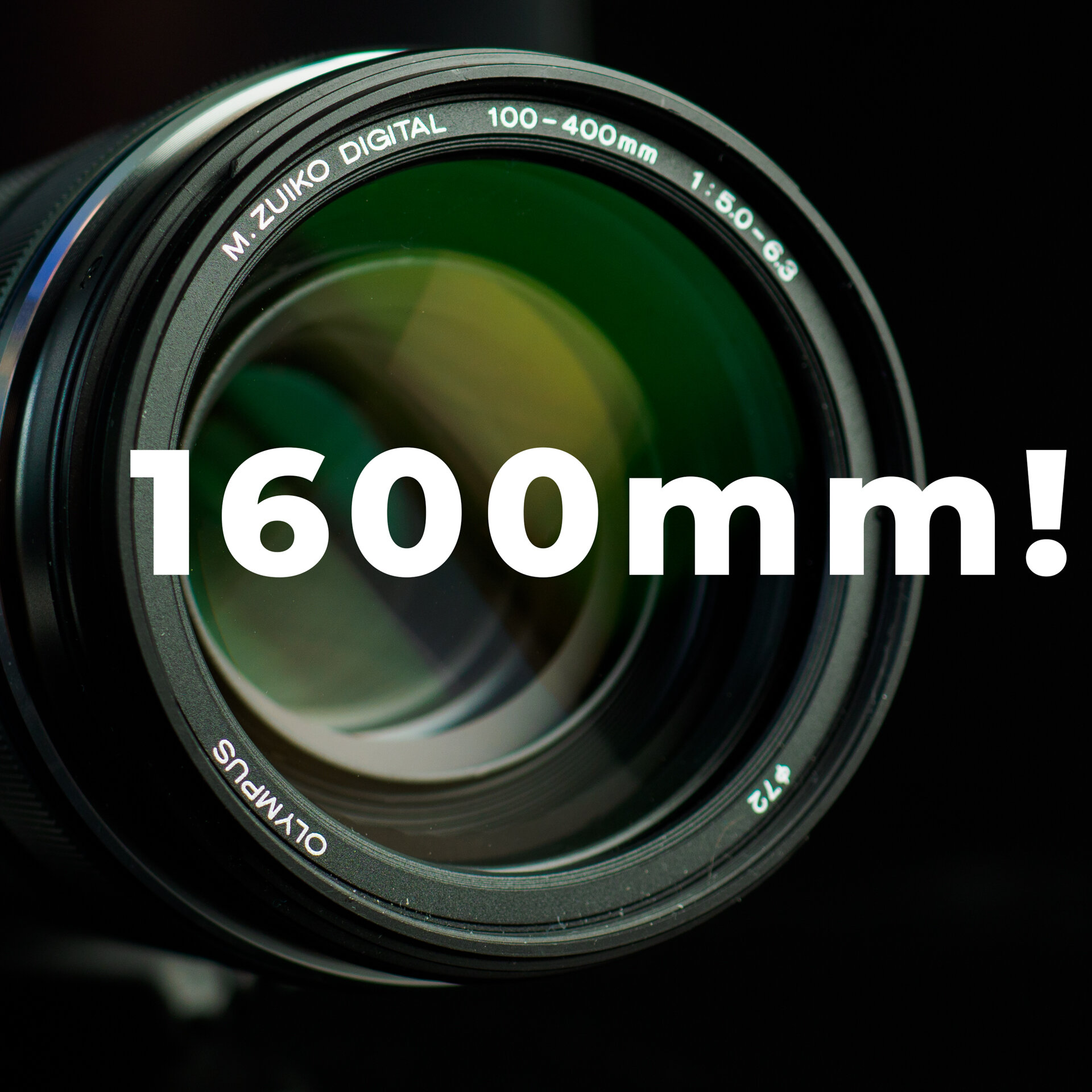
1600mm beast with MC-20
M.Zuiko 100-400mm f5.0-6.3 lens is compatible with the extenders MC-14 and MC-20. That will make the lens even longer. With the MC-14 the focal length is from 140mm to 560mm. That is 280mm to 1120mm in FF terms if we talk about the field of view. To get even more reach it is a 200mm to 800mm lens when used with MC-20. That is of course equal to a 400-1600mm FF lens. That is very long. It comes of course with a cost. The fastest aperture is 13 at the long end. A lot of light is needed to get fast shutter speeds.
What about the image quality?
When adding an extender the image quality is always a question. From 100mm to about 300mm I would say that the image quality is not affected that much. When using 400mm and the MC-20 to get the 1600mm FF equivalent field of view the image quality is a bit less than with other focal lengths.
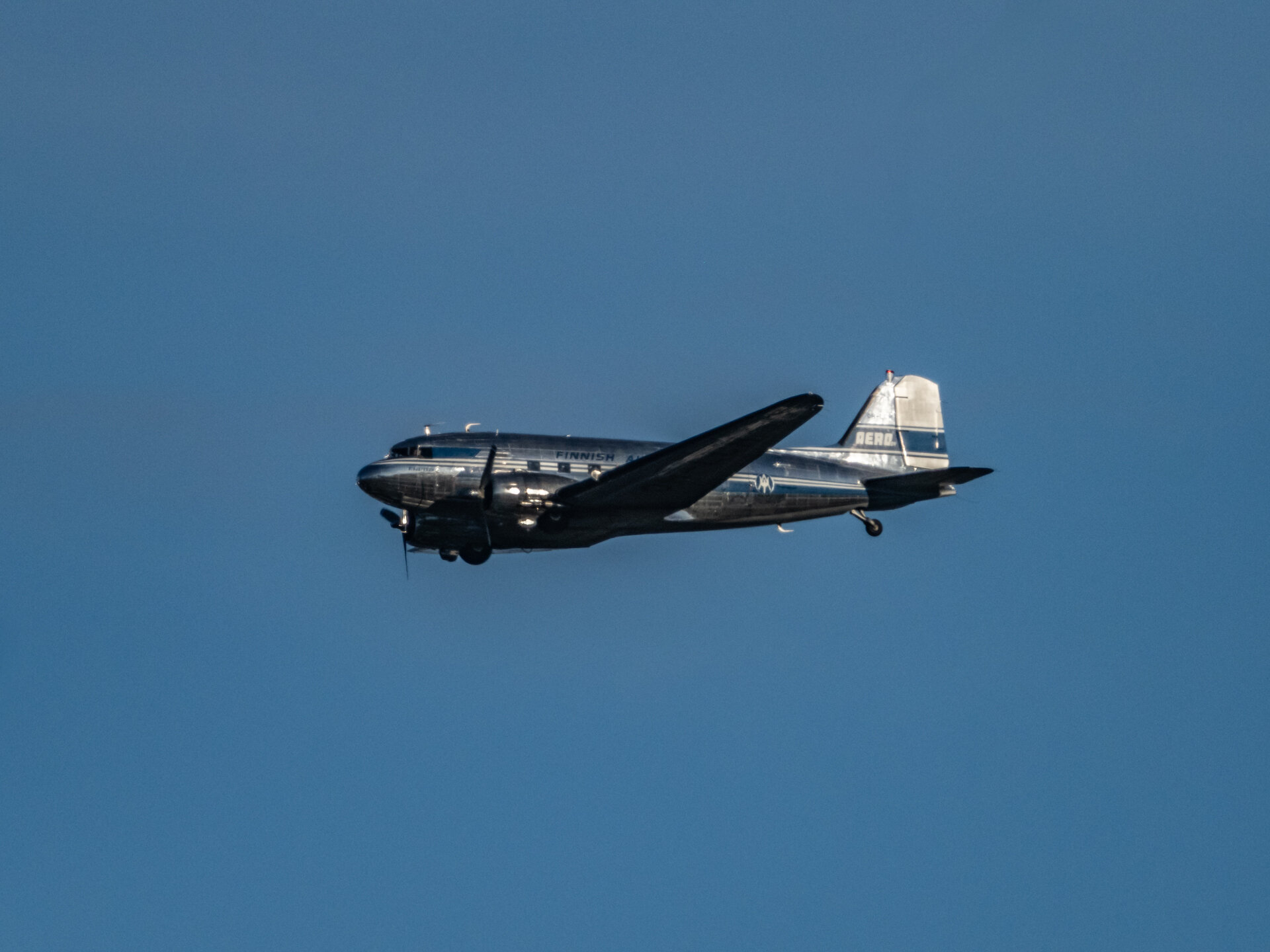
The DC-3 Air Veteran is about 2km (1,24 miles) from the spot I photographed it.Olympus E-M1 MKIII, M.Zuiko 100-400mm f5.0-6.3 + MC-20 at 800mm (1600mm in FF)1/2000s f13 ISO800, handheld.
There are two reasons for that. The first one is that image quality actually is a bit less and the other one is that the objects that is photographed are far away. There are a lot of air and the particles in the air that will make the image quality worse. As you can see from the image above. The distance was about 2km (1,24 miles) to the plane.
A lot of light is needed.
As I wrote earlier in this blog post te aperture at 6.3 is f13 when the lens is used with MC-20. Of course, that is no problem in sunny weather. The shutter speeds are fast even with f13. When the weather is not nice or when it gets dark f13 can be a problem.
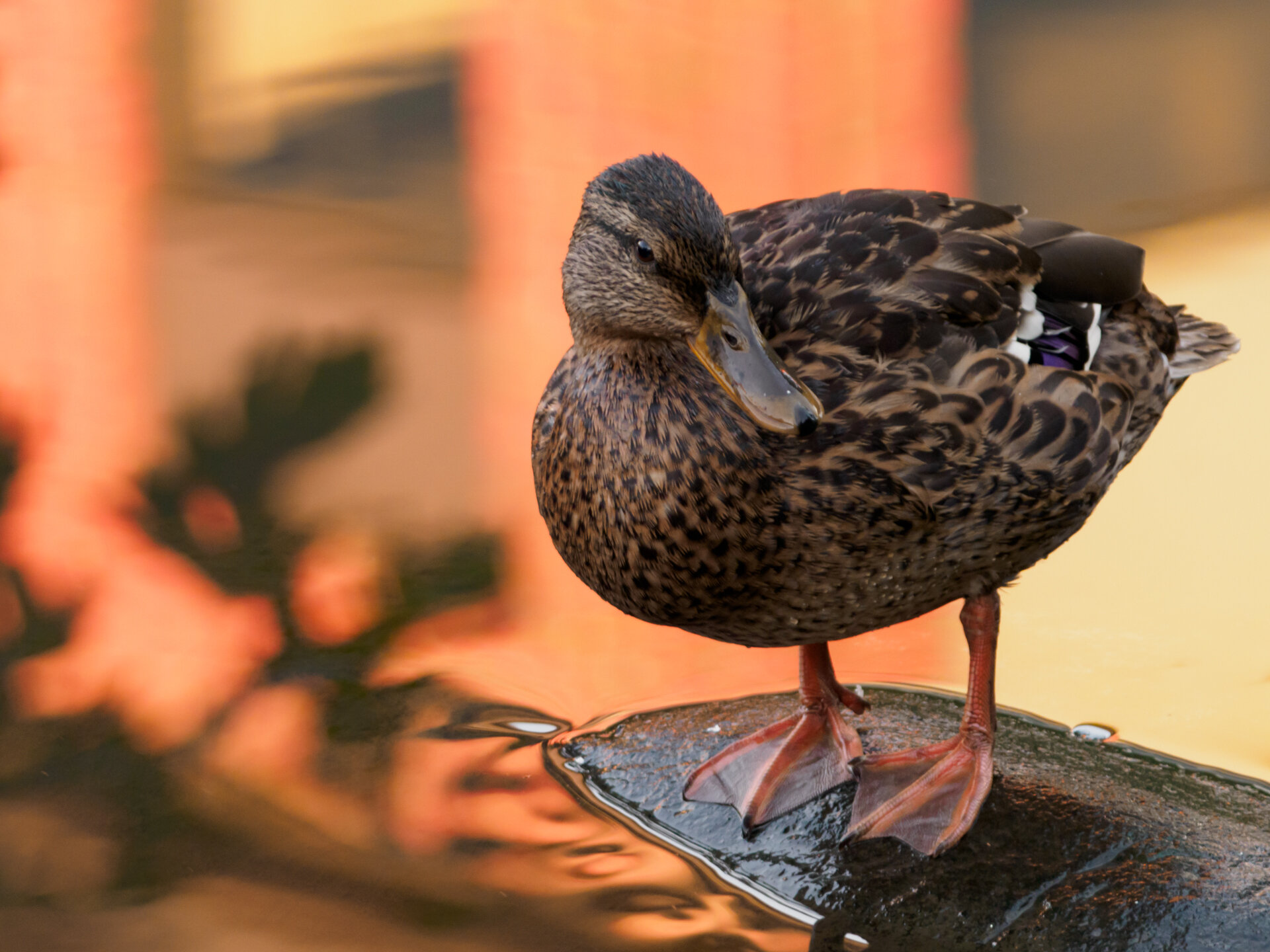
Olympus E-M1 MKIII, M.Zuiko 100-400mm f5.0-6.3 + MC-20 at 400mm (801mm in FF)1/15s f13 ISO800, handheld.
Handheld with 1600mm!
I used it with Olympus E-M1 MKIII and had no problems with handheld shots at all. The IBIS and the IS in the lens work nicely together. It is not SyncIS, but it still works very well. If you are using the lens with E-M1 MKII or E-M1X remember to upgrade your firmware. The IBIS and lens IS works better with the new firmware that is available for those cameras. The image of the duck above was made with 801mm in FF terms with a 1/15s shutter speed handheld.
👉 Pre-order it from Amazon: Olympus M.Zuiko ED 100-400mm f5.0-6.3 IS lens is here. My first impression of the new telephoto zoom lens…
Olympus and Panasonic have both a 100-400mm lens. Which one should you get, Olympus 100-400mm lens or Panasonic 100-400mm lens? 📽 My first impression video a…
disclaimer: Some of the links might be affiliate links to Amazon or other online stores. I will get a small commission if you use those links and buy something. You do not pay any extra. It is a win-win situation!