Category: Photography

  • Gestalt Principle in Street Photography: Simplifying Complexity

    Street scenes are often busy and cluttered. The Gestalt principle helps us understand how to simplify and organize elements in an image to make it more pleasing and manageable for viewers. As a street photographer, I’ve found this principle invaluable in creating compelling images that capture the essence of urban life.
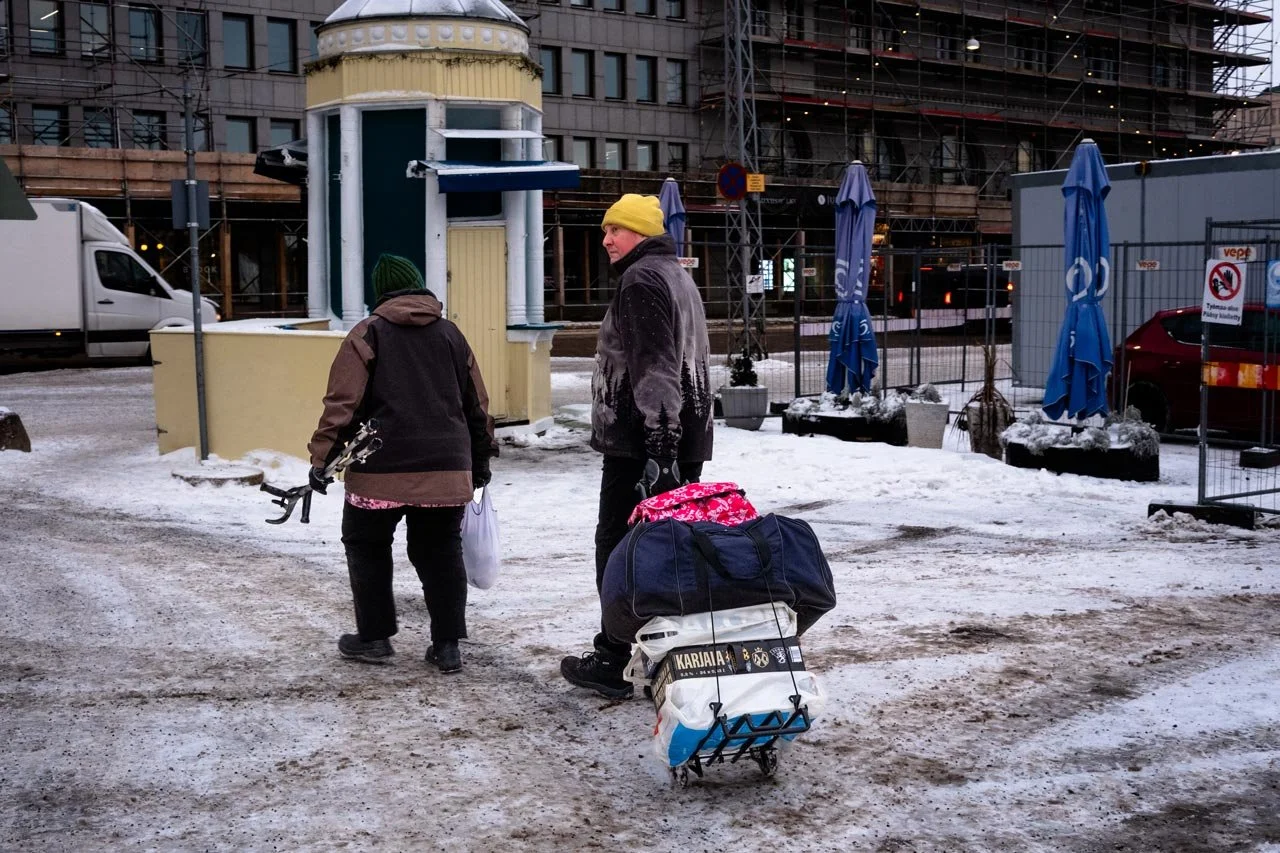
    Two people walking on the street

    Understanding Gestalt in Photography

    The Gestalt principle, originating from psychology in the 1920s, suggests that our brains naturally organize visual information into meaningful patterns. This translates to how we compose our images and how viewers perceive them in photography. The core idea is that “the whole is greater than the sum of its parts,” meaning that the overall impression of an image is more important than its elements.

    The Impact on Viewer Perception

    By applying Gestalt Principles, we can significantly influence how viewers interact with our images:

    Easier Comprehension: A well-organized image is easier for the brain to process, allowing viewers to grasp the main subject and mood quickly.

    Emotional Response: Thoughtful composition can evoke stronger emotional responses by emphasizing key elements.

    Longer Engagement: Interesting compositions encourage viewers to explore the image more and discover subtle details and relationships.

    Balancing Art and Science

    While Gestalt principles provide a solid foundation for composition, it’s crucial to remember that photography is an art form. These principles should be used as guidelines rather than strict rules. The most compelling street photographs often result from knowing when to apply them and when to break them creatively.
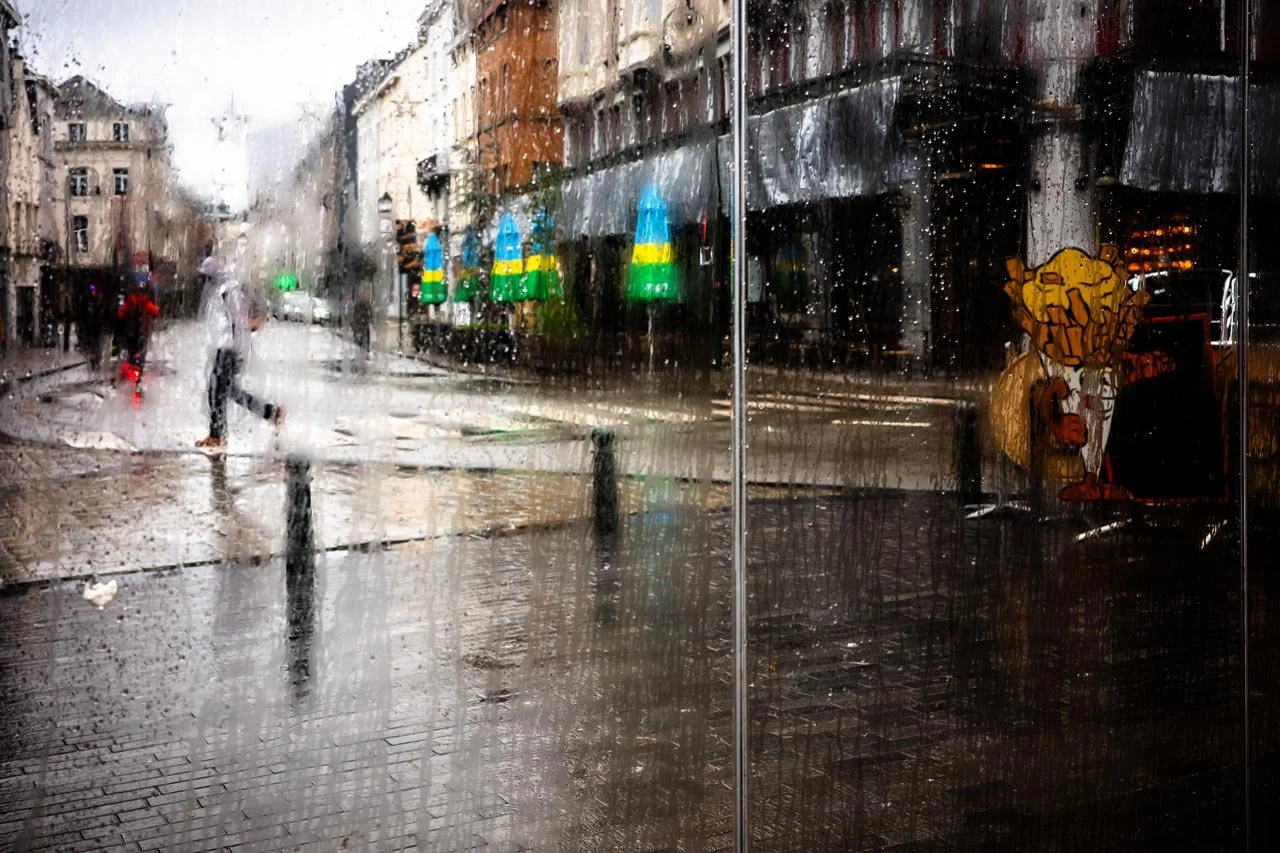
    Man running in rain

    Practical Tips for Applying Gestalt in Street Photography

    1. Observe Before Shooting: Take a moment to observe the scene and identify potential compositional elements.

    2. Look for Natural Frames: Frame your main subject using architectural elements or other objects.

    3. Wait for the Right Moment: Patience can lead to simpler, more impactful compositions as elements align.

    4. Experiment with Perspective: Changing your viewpoint can dramatically alter the relationship between elements in your frame.

    Conclusion

    Understanding and applying Gestalt principles in street photography can transform chaotic urban scenes into compelling visual narratives. By simplifying and organizing elements within our frames, we create images that capture moments and engage viewers on a deeper level. As you continue to practice these principles, they will become an intuitive part of your photographic process, helping you create more powerful and memorable street images.

    Remember, the goal isn’t to create perfectly ordered scenes but to find beauty and meaning in the complex tapestry of street life. By mastering these principles, you’ll be better equipped to tell visual stories that resonate with viewers and stand the test of time.

    More information and photographs are provided in the video below.
  • Choosing the Right Street Photography Camera: Size, Quality & More

    Choosing the Right Street Photography Camera: Size, Quality & More

    Choosing the right camera for street photography is a personal decision that depends on your individual needs, preferences, and shooting style. While there’s no one-size-fits-all solution, there are several key factors to consider when selecting a camera for street photography:

    Size and Discretion

    One of the most important aspects of a street photography camera is its size and ability to blend in. Smaller, lighter cameras are often preferred, making photographers more inconspicuous and agile. Compact cameras, mirrorless systems, and even smaller DSLRs can be excellent choices for street photography.

    Image Quality and Sensor Size

    While not always the most critical factor, good image quality is still essential. Cameras with larger sensors (APS-C or full-frame) generally offer better low-light performance and dynamic range. However, even cameras with smaller sensors can produce excellent results for street photography. That is why micro-four-thirds cameras are perfect for street photography. 

    Lens Options

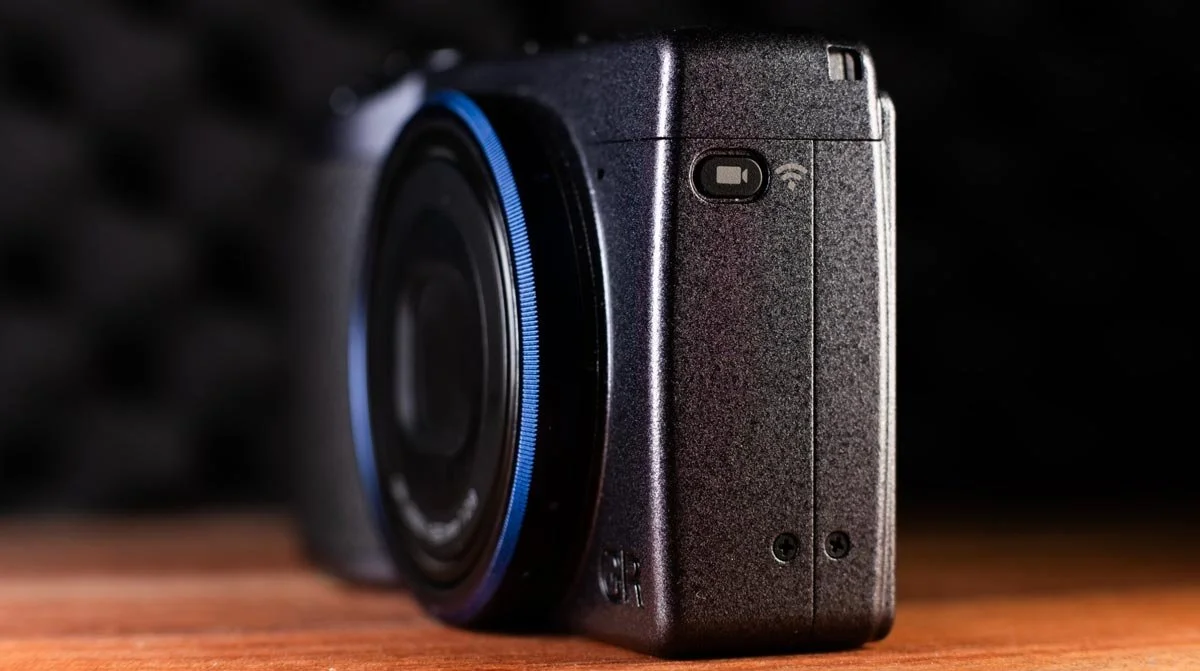
    Consider whether you prefer a fixed lens or an interchangeable lens system. Fixed lens cameras like the Fujifilm X100 series or Ricoh GR3 and Ricoh GR3x are popular among street photographers for their simplicity and compact size. If you opt for an interchangeable lens system, prime lenses in the 28mm to 50mm range are commonly used for street photography. My favorite focal length is 40mm. It is a good compromise between a wide angle and a standard lens. 

    Autofocus and Responsiveness

    Fast and accurate autofocus is crucial for capturing fleeting moments on the street. Look for cameras with fast AF systems and minimal shutter lag. Some photographers also appreciate zone-focusing capabilities for even quicker shooting. Do not forget that manual focusing is also an option. 

    Ergonomics and Controls

    A camera that feels comfortable in your hands and has intuitive controls is essential for street photography. Look for models with easily accessible manual controls and customizable buttons.

    Low-Light Performance

    Street scenes often involve challenging lighting conditions so that good high-ISO performance can be beneficial. This is where larger sensor cameras often have an advantage.

    Silent Operation

    A quiet shutter can be invaluable for discreet shooting. Many modern cameras offer silent electronic shutter modes, which can be particularly useful for street photography.

    Weather Sealing

    If you plan to shoot in various weather conditions, consider a camera with some level of weather sealing to protect against light rain and dust.

    Budget

    Street photography cameras come in a wide range of prices. While high-end options like Leica cameras are popular among some street photographers, there are excellent choices at every price point. Remember that the most expensive camera isn’t necessarily the best for your needs.

    Some cameras that are widely used for Street Photography 

    The Fuji X100-series is a very popular camera among street photographers. Fuji X100-series compact cameras combine retro styling with cutting-edge technology, making them a joyous and powerful tool for capturing street scenes. The Fuji X100VI is the latest model. The earlier model might not have all the newest features, but they are still quite a good option. The Fuji X100V camera is still worth considering.

    Other popular cameras are the Ricoh GR3 and GR3x. The GR3 model has 28mm lens (equiv. in FF terms) and the GR3x has a 40mm lens (equiv. in FF terms). This compact camera easily slips into a pocket yet delivers image quality that rivals larger cameras. The GR III’s Snap Focus feature is handy for street photography, allowing you to preset focus distances for rapid shooting.

    Leica Q3 is probably the best choice for a high-end camera. Leica Q3 delivers unparalleled image quality and a shooting experience that many photographers find deeply satisfying. 

    My camera choices

    I mainly use Ricoh GR3x and Fuji X-M5 cameras for street photography. I have an XF27mm F2.8 lens on my X-M5. 

    Conclusion

    Ultimately, the best camera for street photography is one that you enjoy using, and that doesn’t get in the way of your creativity. Whether you choose a compact point-and-shoot, a mirrorless system, or even a smartphone, what matters most is your eye for composition and your ability to capture compelling moments on the street.

    Remember, many great street photographers have created iconic images with various cameras. Focus on developing your skills and finding a camera that suits your style and workflow. With practice and the right tools, you’ll be well-equipped to capture the vibrant energy of the streets.

  • A few thoughts about Ethics in Street Photography

    Street photography is a fascinating genre that captures candid moments of everyday life but raises important ethical considerations.

    As a street photographer, I’ve thought about these issues and developed my approach over the years. Here’s an overview of the fundamental ethics in street photography and some best practices to consider:

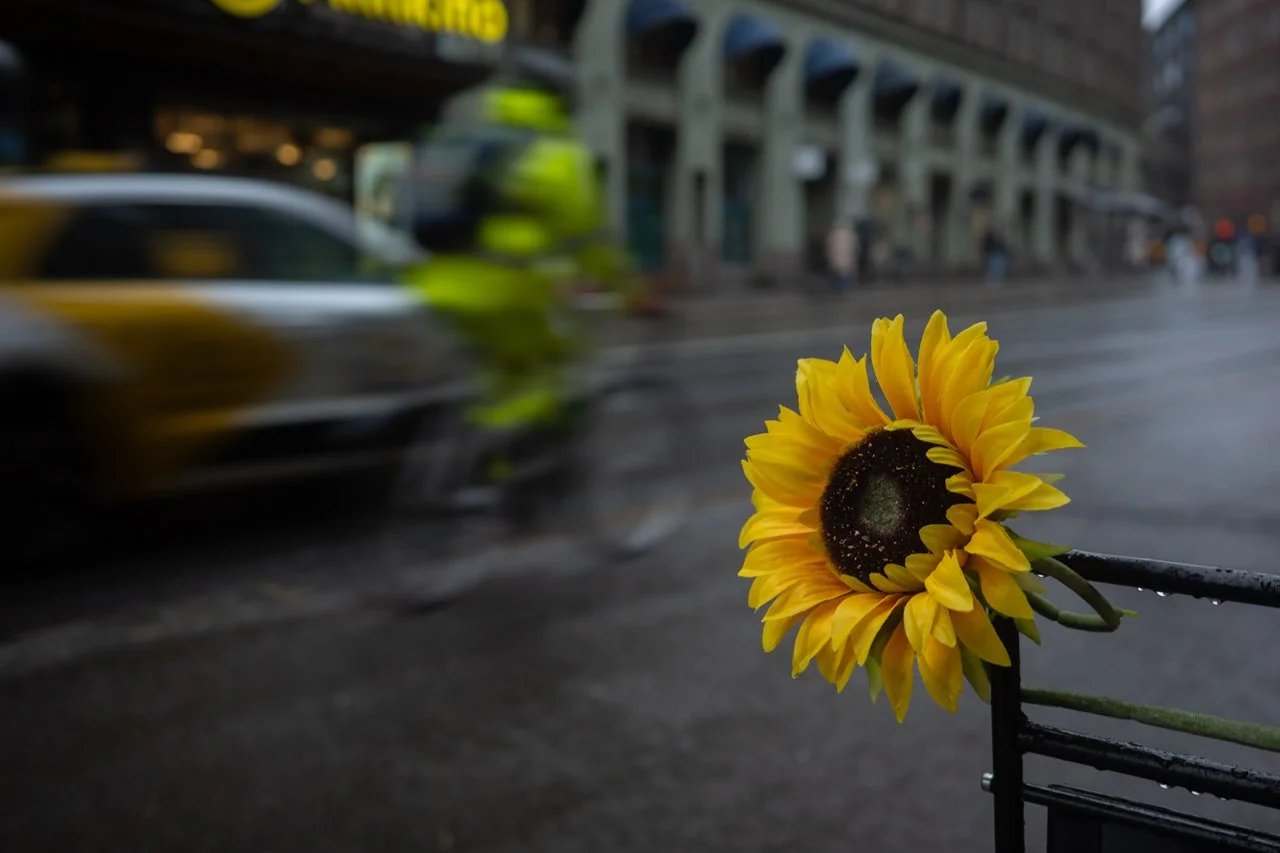
    A sunflower in the city with a bicycle rider in the background

    Legal vs. Ethical Considerations

    It’s essential to first distinguish between what’s legal and what’s ethical in street photography. In many countries, it’s generally legal to photograph people in public spaces without their explicit consent. Street photography is considered part of free speech. However, just because something is legal doesn’t necessarily make it ethical.

    Key Ethical Issues

    Consent and Privacy

    The core ethical dilemma in street photography revolves around photographing people without their knowledge or consent. While capturing candid moments is central to the genre, it can feel intrusive to the subjects. There’s a balance between artistic expression and respecting people’s privacy and autonomy.

    Representation and Dignity

    Street photographers are responsible for portraying their subjects with dignity and avoiding exploitation. This is especially important when photographing vulnerable populations like the homeless. We should ask ourselves if we’re representing people fairly and compassionately.

    Publication and Social Media

    In the age of social media, street photos can be widely shared instantly, amplifying concerns about privacy and representation. A seemingly innocent photo could go viral and have unintended consequences for the subject.

    Ethical Best Practices

    While there’s no universal code of ethics for street photography, here are some guidelines I try to follow:

    – Be respectful and empathetic towards your subjects. Put yourself in their shoes.

    – If someone objects to being photographed, respect their wishes. Delete the photo if asked.

    – Avoid photographing people in vulnerable or compromising situations.

    – Consider seeking consent after a candid shot, especially for close-up portraits.

    – Be thoughtful about which photos you choose to publish or share online.

    – Photograph with honest and positive intentions, not to mock or exploit.

    Finding Your Ethical Approach

    Ultimately, each street photographer must develop an ethical framework based on their values and cultural context. I believe the key is to remain thoughtful and self-reflective about our practice.

    As the photographer Gordon Parks said, “The subject matter is so much more important than the photographer.” Keeping this perspective and prioritizing respect for our subjects can create powerful street photography while maintaining ethical standards.

    What are your thoughts on the ethics of street photography? I’d love to hear your perspective in the comments below.

    Some further reading

    Aesthetics of Photography: Legal and Ethical Considerations in Street Photography

    About Photography Blog: The Don’ts of Street Photography

    Sarah Carpenter: The Ethics of Street Photography