Author: Peter Forsgard

  • Photo competitions: Good, Bad, and What they do to your Photography?

    Photo competitions: Good, Bad, and What they do to your Photography?

    Photo competitions are everywhere these days. You see them in local camera clubs and also in big international contests. They often promise you more exposure, some recognition, and sometimes even money. But they can also take your money and make you feel bad about your photography. I want to share three reasons why I think photo competitions can be good for you, and three reasons why they can be bad.

    Why are photo competitions good?

    1. They give you focus and motivation

    Having a clear theme and a deadline can really help you focus on your photography. Instead of just walking around and hoping to find a good photo, you start to think about the subject and plan what you want to do. This kind of structure, like knowing you need to send your images by a certain date, can get you out shooting when you might just stay home otherwise.

    Competitions can also help you try new things. For example, if you usually shoot landscapes, you might try portraits because of a contest theme. Or maybe you try long exposures or night photography for the first time. Even if you never send your photo in, just working towards a goal like this helps you learn and gives you more confidence for your own projects.

    2. They can boost exposure and credibility

    If you get picked or even just featured in a competition, it can make your work look more important to other people. Those little badges like ‘award-winning’ or ‘finalist’ do not make you a better photographer right away, but they can help others notice you and maybe take your work more seriously.

    Exposure can come in different forms: your images might appear in online galleries, printed catalogues, touring exhibitions, or social media promotions.

    This can lead to new followers, print sales, commissions, or teaching opportunities.  For some photographers, one solid competition result becomes the door opener for portfolio reviews, gallery conversations, or brand collaborations.

    3. They sharpen your editing and self‑critique

    Competitions make you choose your best work, and that is actually a good skill to have. You cannot just send 200 photos. You have to pick one or a small group that really shows what you want to say. This helps you look at your photos more carefully and think about things like light, timing, and how the picture feels.

    You also get to see your photos next to many others. Sometimes this can feel tough, but it is also a good way to learn. You start to see what works, what is too common, and what really stands out. This helps you see your own strengths and what you can work on.

    Why can photo competitions be bad?

    1. They can damage your confidence

    The emotional downside is very real: you can pour your heart into an image, pay the fee, wait weeks, and then nothing. Do that a few times, and it’s easy to start thinking your work is worthless, even if you’re actually growing as a photographer.  For some people, repeated rejection leads to creative paralysis, making them afraid to experiment or share their images at all.

    The bigger problem is that contest results do not always show what is good. Judges all have their own taste, and trends change all the time. Good photos can be missed when there are so many entries. If you let the results decide how you feel about your photography, you are letting strangers tell you what your work is worth.

    2. They can cost you money and rights

    Many competitions ask for entry fees, and the chance of winning is usually very small. If you enter many categories or contests, the small fees add up, and you can spend a lot of money for very little in return.

    Some contests also have rules that let them use your photos for free, just because you entered. If you do not read the rules carefully, you might give away your best work and get nothing back. Always check what rights you are giving up.

    3. They can push you toward formulaic work

    One subtle danger of competitions is that they can nudge photographers toward what has “worked” before rather than what feels authentic now. If you keep studying previous winners and tailoring your work to match those aesthetics, you may start chasing trends instead of your own voice.  Over time, this can homogenize the visual language in certain genres everyone copying the same look, subjects, and moods.

    This is not good for your own projects or for trying new things. You might start to ask, ‘Will this win?’ instead of ‘Do I like this?’ In the end, this can stop you from trying new ideas or taking risks, which is how you really grow as a photographer.

    So, should you enter?

    Photo competitions are just tools, not a way to measure your talent. They can help you with deadlines, getting seen, and improving your skills. But if you spend too much, do not read the rules, or let the results decide how you feel, they can do more harm than good. If you use them carefully, they can help you grow.

    But do not forget, the most important thing is to make photos that matter to you.

    One that you could consider is the Pure Street Photography Awards 2026.

    (Disclaimer: I have no connections with the competition. I just wanted to share it since I might take part myself.)
  • From Imitation to Vision: Lessons from the Masters

    I think legendary photographers are not just lucky people who had a camera at the right moment. They are artists who changed how we look at the world and what photography can be. Their photos show that great images do not come from gear or presets. It is about being curious, taking risks, and sticking to your own way of seeing things. When you look at their work, you start to see that the most important lessons are not about technique, but about who you become as a photographer.

    See the world through a personal lens

    The great masters do not simply document reality; they interpret it.
    Robert Frank turned everyday American scenes into a melancholy, fragmented poem. Vivian Maier quietly observed strangers with a blend of empathy and distance. Saul Leiter treated the city like a painting, using color and reflections as emotional brushstrokes.

    All of them have their own way of seeing. The way they choose where to stand, when to take the photo, what to show or leave out, and how they put their images together all come from inside. I think your real job as a photographer is to find your own way of looking at the world. If you do it honestly and keep at it, people will start to recognize your photos even before they see your name.

    One way to do this is to notice what you keep coming back to. Maybe you like to photograph lonely people in crowds, or small acts of kindness, or strong shadows, or something else. Do not fight these things. Go with them. After a while, your style will show what really interests you.

    Use “imperfections” as expressive tools

    If you look at the work of classic photographers, you will see that many things people call mistakes are actually choices, or sometimes just happy accidents:

    • Grain that roughens the image and adds grit

    • Motion blur that conveys speed, confusion, or emotion

    • Tilted horizons that create unease or energy

    • Harsh contrast that amplifies drama

    In the past, people thought good photos had to be sharp and perfect. But many great photographers did the opposite. They knew that photography is not about tests or perfect results. It is a way to say something. Sometimes you want to be loud, sometimes quiet, and sometimes a bit rough. Imperfections can make your photos more interesting.

    So, do not just ask if your photo is technically good. Ask if it feels real. A little blur or a bright spot might be bad for a product photo, but in your own work, these things can show real feeling.

    Edit ruthlessly and think in bodies of work

    Legendary photographers are not known for just one photo. They are known for whole projects, books, or series. They take a lot of photos, but only show a few. The real work is not just taking pictures, but also choosing which ones to show.

    Out of thousands of photos, only a few make it. Editing is where you find the story. Sometimes a simple photo becomes strong when you put it with others. Sometimes you have to leave out a good photo if it does not fit the rest.

    For your own practice, this means:

    • Shoot generously, but don’t publish generously.

    • Create folders or collections for themes you keep returning to (solitude, reflections, commuters, lovers, etc.).

    • Periodically print small work prints or contact sheets and live with them on a wall or table.

    Try to think like someone making a book, not just posting single photos online. The best photographers show us that good work takes time and careful choices.

    Let curiosity lead, not formulas

    Almost all legendary photographers started with curiosity. They did not have a plan or a formula. They just had questions:

    • What does this city really feel like?

    • Who are the people nobody usually looks at?

    • How does light change the mood of familiar places?

    They tried new things. They broke the rules. Sometimes they did things that seemed odd or unimportant. Many of them were not popular at first, but later people understood their work.

    I think you should stop asking, ‘What should I shoot?’ and start asking, ‘What do I really care about?’ If you follow your own interests, your photos will be more real, even if they are not perfect. Curiosity helps you grow as a photographer. You do not have to stick to one style forever.

    Get closer to human complexity

    If you look at the portraits and street photos by the masters, you will see they are not always pretty in the usual way. They show real people, with all their awkwardness and feelings. Sometimes the photos are beautiful, sometimes they are hard to look at, and sometimes both.

    Being willing to show real life is what makes great photography. It means:

    • Getting physically closer when your instinct is to stay safe and far away.

    • Staying with a scene a little longer, through the discomfort.

    • Being honest about what you see instead of sanitizing it for easy likes.

    You do not have to be pushy, but you do have to be honest. The camera can show both you and the people you photograph. If you are not afraid to show things like loneliness, tension, or kindness, your photos will have more meaning than just looking nice.

    Accept chaos and ambiguity in the frame

    Today, many photographers try to make everything simple and clean. But the masters show us that it is okay to have some chaos in your photos. Their pictures often have many things happening at once, and not everything is clear.

    This messiness is not a mistake. It is part of life. If your photos have some of this feeling, they will feel more real and less like something made just to look perfect.

    Practically, this means allowing:

    • Overlapping figures and intersecting gestures

    • Reflections, shadows, and framing that complicate rather than clarify

    • Moments where the viewer must work a little to understand what is happening

    So, do not just ask if your subject stands out enough. Ask if there is enough going on in the photo to make people want to look at it longer.

    Make the work first, explain it later (if ever)

    Many legendary photographers did not like to explain their work with fancy words. They did not always know what their photos meant at first. They trusted that the meaning would come out over time, through the photos and how people reacted to them.

    Today, people feel they need a perfect artist statement and a clear idea before they start. There is nothing wrong with being clear, but if you try too hard, you might force your photos to fit an idea instead of letting them surprise you. The masters show us that photography is a way to think, not just a way to show what you already know.

    Give yourself permission to:

    • Work on projects for months or years before naming them.

    • Make images you don’t yet fully understand.

    • Let other people’s readings of your work teach you something about what you’ve done.

    You can always explain your work later if you want. But your photos should speak for themselves first. Your job is to keep taking honest pictures and keep choosing what to show. Over time, your work will start to make sense, just like it did for the masters.

    If you want to learn more, check out my playlist of videos about the Masters.

  • Ricoh GRIV Monochrome Joins the Rare World of Black & White Cameras

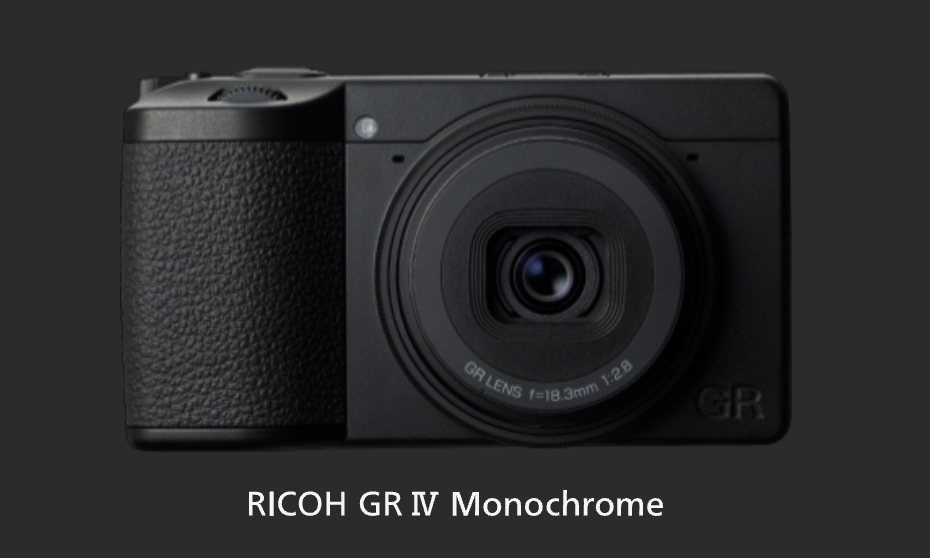
    Image: Ricoh

    Ricoh has just released a monochrome version of its GRIV camera. There are not too many monochrome cameras out there. Only Leica and Pentax are making them. Both have two models right now. Leica has the M11 Monochrom and Q3 Monochrom, and Pentax has the K-3 III Monochrome. Now there is also the Ricoh GRIV Monochrome. Ricoh is made by Pentax, by the way.

    I think it was a good idea from Pentax to make a monochrome version of the GRIV. I feel that street photographers are probably the ones who use these cameras the most. I am not sure if there are many other types of photography where a monochrome camera would make sense. Maybe some portrait photographers could use one too.

    Why a Monochrome camera?

    The answer is quite simple. The image quality in black and white is better than with a normal color sensor. The reason is that a monochrome sensor does not have a color filter, so it lets more light in. I think the Ricoh GRIV Monochrome gets about 2/3 stops more light. That means it works better in low light. The images are also sharper because there is no need for demosaicing. So there are some real benefits for image quality.

    Other features that matter?

    The camera is based on the Ricoh GRIV. There is a new sensor and a new processor. They have added an electronic shutter, too.

    The ND filter is now a red filter. It makes reds lighter and blues darker, so the sky and clouds have more contrast. The photos look more dramatic. You can turn off the red filter if you do not want to use it.

    They have also added some extra protection to the lens. This should help keep dust away from the sensor.

    What about the price?

    The price is $2200 in the US. That is a lot for a camera that is really just for black and white street photography. But it is still much cheaper than the Leica Monochrom cameras, which cost three to five times more. The Pentax K-3 III Monochrome is a big and heavy DSLR, so it is not really good for street photography either.

    In Europe, the price is about 1800 euros, so it is not much cheaper. That is about $2000, so a bit less than in the US. In the UK, it is about £1599, which is around $2150. (These are the prices at the time I am writing this.)

    Am I interested in buying one?

    I probably will not buy this camera. I do not shoot much in color anyway. Also, I like to use a 40mm equivalent lens for street photography. That is why I have not bought the Ricoh GRIV. I am waiting for the GRIVx with a 40mm lens. There are some features in the GRIV that I would like, especially the 53GB internal memory.

    What about you? Are you interested in getting one?

    My Best Settings for GR3 cameras

    I have updated my Ricoh GR3 & GR3x: Best Settings for Street Photography to a new version. This time it is available on Amazon as a Kindle eBook.