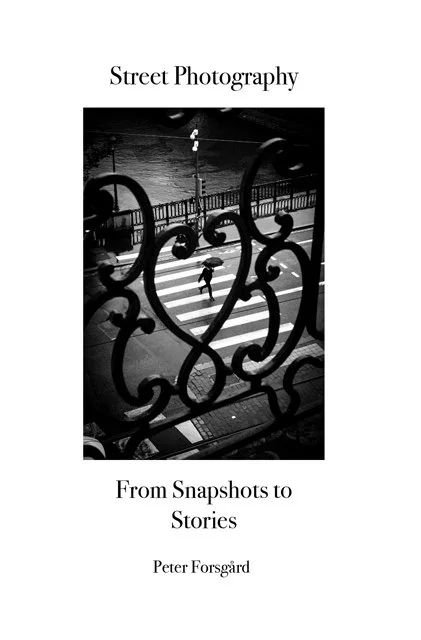
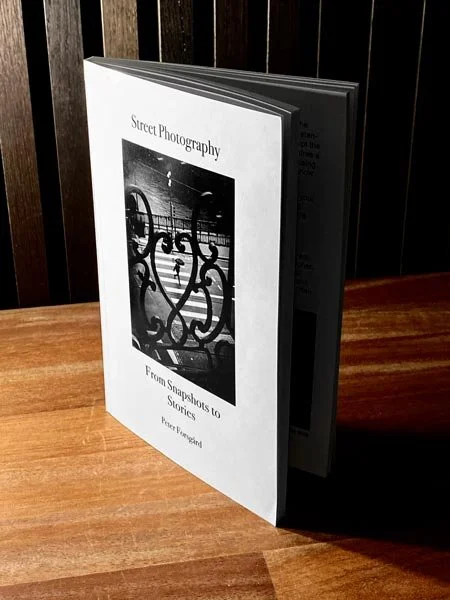
I am happy to share some exciting news: my new book, Street Photography: From Snapshots to Stories, is now published!
This book is about seeing beyond the quick snapshot. It helps you understand how to create stronger visual stories with your camera. I share many ideas and examples from my years of street shooting in Helsinki and other cities. I discuss what really makes a photo come alive.
The book offers simple, practical advice on observation, composition, and finding meaning in everyday moments. My goal is to help you not only take better pictures but also see the world around you in a new way.
Street Photography: From Snapshots to Stories is available on The Great British Book Shop. It sells books to 185 countries. It is also available on Amazon in print and Kindle formats.
I hope you will enjoy reading it and get inspired to tell your own stories through photography.
After you have read it, a review on Goodreads would be much appreciated.
I have a habit of making a video about my best work from the previous year as my first video of the new year.
I think it is essential to look back at your images. There are many benefits.
You find patterns and similarities
You find stories
You find memories
You find images that you missed in the first round.
All of those things help you to become a better photographer. I assume you will want to be? If your goal is something else, that’s totally ok. Never underestimate the power of the memory that a photograph can give you.
In my video about my best images from 2025, I said that I want to see your best image from 2025.
I have set up a page in Picdrop where you can download your best image. The gallery is public, but you need a password to upload your image and browse uploaded images. There is also the option to comment on and like the images.
Important info!
Name your photo like this: lastname_firstname. This way, we know who made the image. Resize the iamhe so that the longer side is 2840 pixels. After you have uploaded, feel free to create a comment about your own photograph. I would love to hear why the image was your best from 2025. Upload your photo by the 10th of January 2026.
By uploading your image, you will grant me (Peter Forsgard) the right to display it on Picdrop, show it when I give feedback, and allow others to comment on it on Picdrop. The full copyright remains with you.
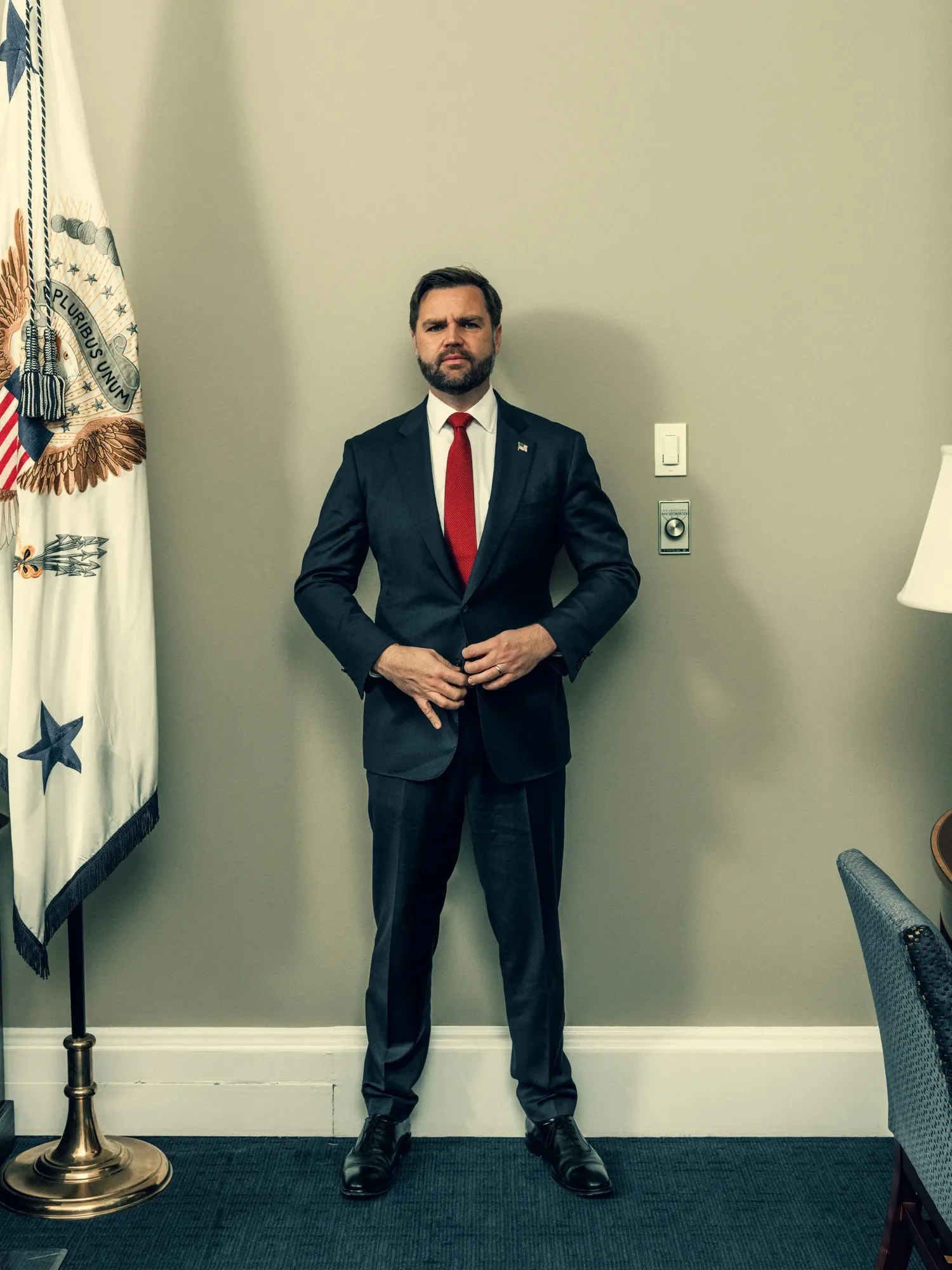
The latest issue of Vanity Fair features some of the most striking photojournalism by Christopher Anderson I’ve seen in a very long time. The images appear in a two-part story about the Trump administration, and they’ve quickly gone viral, for good reason. The photographs are powerful, deeply considered, and unmistakably the work of a seasoned professional.
What makes these photos so compelling is their deceptive simplicity. At first glance, they might look “imperfect”; subjects are photographed against walls, harsh shadows are cast, and clutter fills parts of the frame. But these so-called mistakes are anything but accidental. They’re deliberate choices, made to serve the story. Each visual “flaw” adds tension, realism, and emotional weight. It’s a masterclass in how intentional imperfection can reveal more truth than polished imagery ever could.
Image by Christopher Anderson, Vanity Fair
This image above is a good example. The shadow, the light switch, and so on. The composition also leaves a lot of room at the top. That tells me that Christopher Anderson wanted to show him smaller. Someone has said that the images look like they were taken from a gallery of staff in a small, outdated hotel…
This is the kind of work that highlights the difference between an amateur snapshot, an AI-generated image, and a photograph crafted by a true storyteller. You can’t fake that instinct, the ability to break rules for a purpose, to make imperfection expressive. Ironically, it takes years of discipline and experience to photograph something that feels so raw and unfiltered.
Some readers seem to have missed Christopher Anderson’s point with this series. Yes, he’s documenting the Trump administration, but he’s also interpreting it. He’s expressing a perspective, offering commentary through tone, composition, and nuance. That’s where photojournalism becomes complex. On the one hand, a journalist should aim to inform without bias. On the other hand, photography has always carried a voice, a mood, and a moral stance, especially when done by an artist as thoughtful as Anderson.
I admire Anderson’s courage to imbue his work with opinion while staying true to the journalistic craft. His photographs remind us what professional photojournalism really is: not just recording events, but revealing meaning. This is something that no AI or casual snapshot can replicate. It’s the human touch, the intuition, the empathy, and the risk that define the difference.
Christopher Anderson’s Vanity Fair series doesn’t just cover a political story. It stands as a vivid reminder of what photography can still do in capable hands.
Read the whole story with all the images from Vanity Fair, part one, part two. The stories are behind a paywall, but a Vanity Fair digital subscription is only $12 a year (+taxes), so I paid the total of $13,20. Seeing this magnificent work from Christopher Anderson is worth more than $13,20.