Author: Peter Forsgard

  • Gestalt Principle in Street Photography: Simplifying Complexity

    Street scenes are often busy and cluttered. The Gestalt principle helps us understand how to simplify and organize elements in an image to make it more pleasing and manageable for viewers. As a street photographer, I’ve found this principle invaluable in creating compelling images that capture the essence of urban life.

    Two people walking on the street

    Understanding Gestalt in Photography

    The Gestalt principle, originating from psychology in the 1920s, suggests that our brains naturally organize visual information into meaningful patterns. This translates to how we compose our images and how viewers perceive them in photography. The core idea is that “the whole is greater than the sum of its parts,” meaning that the overall impression of an image is more important than its elements.

    The Impact on Viewer Perception

    By applying Gestalt Principles, we can significantly influence how viewers interact with our images:

    Easier Comprehension: A well-organized image is easier for the brain to process, allowing viewers to grasp the main subject and mood quickly.

    Emotional Response: Thoughtful composition can evoke stronger emotional responses by emphasizing key elements.

    Longer Engagement: Interesting compositions encourage viewers to explore the image more and discover subtle details and relationships.

    Balancing Art and Science

    While Gestalt principles provide a solid foundation for composition, it’s crucial to remember that photography is an art form. These principles should be used as guidelines rather than strict rules. The most compelling street photographs often result from knowing when to apply them and when to break them creatively.
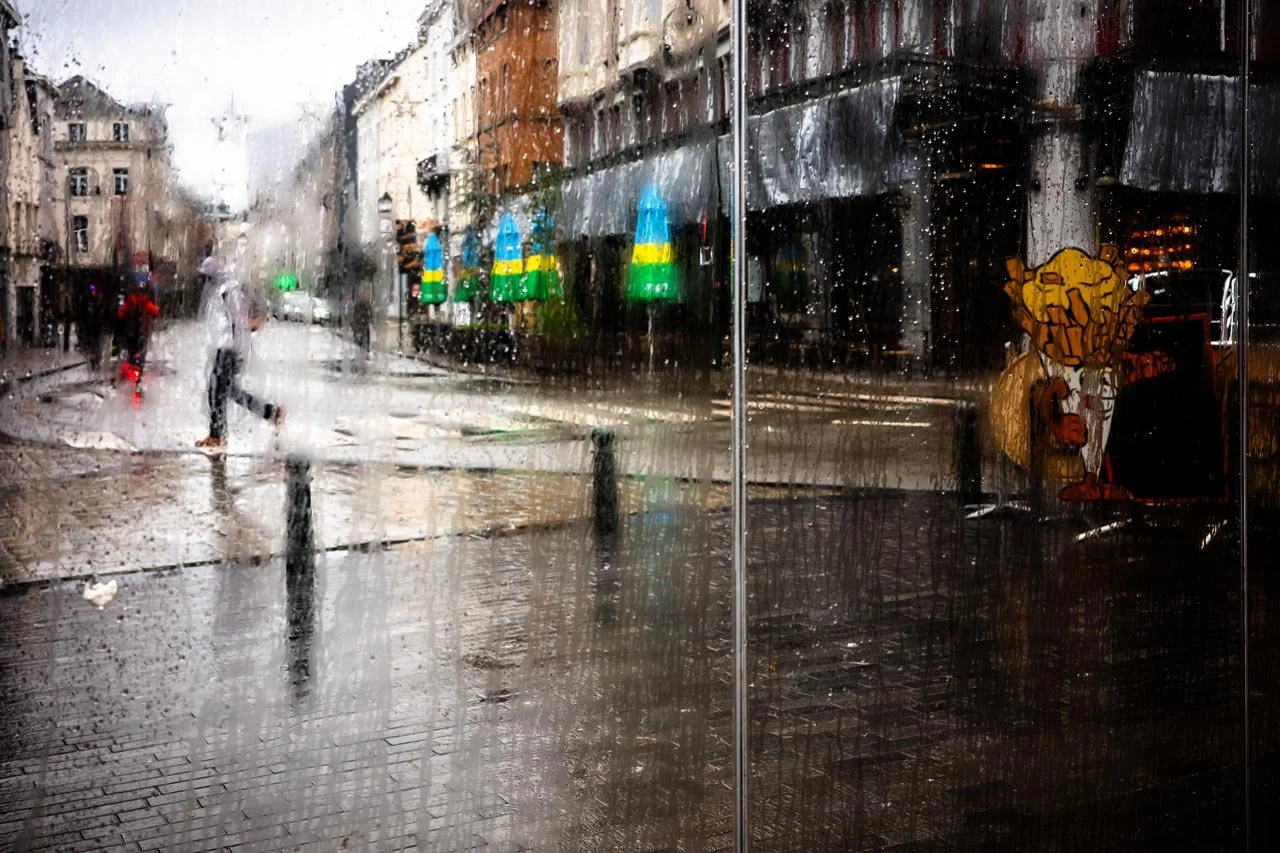
    Man running in rain

    Practical Tips for Applying Gestalt in Street Photography

    1. Observe Before Shooting: Take a moment to observe the scene and identify potential compositional elements.

    2. Look for Natural Frames: Frame your main subject using architectural elements or other objects.

    3. Wait for the Right Moment: Patience can lead to simpler, more impactful compositions as elements align.

    4. Experiment with Perspective: Changing your viewpoint can dramatically alter the relationship between elements in your frame.

    Conclusion

    Understanding and applying Gestalt principles in street photography can transform chaotic urban scenes into compelling visual narratives. By simplifying and organizing elements within our frames, we create images that capture moments and engage viewers on a deeper level. As you continue to practice these principles, they will become an intuitive part of your photographic process, helping you create more powerful and memorable street images.

    Remember, the goal isn’t to create perfectly ordered scenes but to find beauty and meaning in the complex tapestry of street life. By mastering these principles, you’ll be better equipped to tell visual stories that resonate with viewers and stand the test of time.

    More information and photographs are provided in the video below.

  • 5 Ways to Develop a Healthier Approach to Photography Gear

    5 Ways to Develop a Healthier Approach to Photography Gear

    As photographers, it’s easy to get caught up in the excitement of new gear. But focusing too much on equipment can hold us back.

    Here are five tips for developing a healthier relationship with your photography gear:

    Learn Photography Basics First

    Before worrying about fancy cameras and lenses, master the fundamentals. Understanding composition, lighting, and exposure is far more critical than having the latest gear. These skills will serve you well no matter what equipment you use. Spend time practicing and experimenting with the camera you already own.

    Use the Gear You Have

    You don’t need pro-level equipment to take great photos. Many photographers create stunning images with entry-level cameras and kit lenses. Instead of obsessing over gear you don’t have, push yourself to get the most out of what’s already in your bag. Challenge yourself to shoot in different conditions and genres with your current setup.

    Only Upgrade When You Know Exactly What You Need

    Avoid impulse purchases. Before buying new gear, identify specific problems it will solve or add capabilities. For example, upgrading to a faster lens for low-light shooting or a longer telephoto for wildlife photography. Make sure any new equipment aligns with your photographic goals and style.

    Don’t Worry About Having “Pro” Gear

    Professional-grade gear is nice but not necessary for most photographers. Entry-level and mid-range cameras are more than capable of producing high-quality images. Focus on developing your skills and vision rather than chasing the most expensive equipment. Remember, the photographer, not the camera, creates excellent photographs.

    Focus on Taking Photos, Not Talking About Cameras

    Photography is about creating images, not collecting gear. Spend more time shooting and less researching or discussing equipment online. The best way to improve is through practice and experimentation.

    Get out there and take photos!

    By following these tips, you’ll develop a healthier relationship with your gear and become a better photographer.

    Remember, the most essential equipment is the one between your ears – your creative vision.

    My video about why I think gear-talk is toxic.

  • What is a Good Way to Learn the Fundamentals of Photography?

    What is a Good Way to Learn the Fundamentals of Photography?

    Photography is an art form that combines technical skill with creative vision. Learning the fundamentals can seem daunting for beginners, but with the right approach, anyone can master the basics and start taking stunning photos. Here’s a comprehensive guide on how to effectively learn the fundamentals of photography.

    Start with the Basics

    Understanding Your Camera

    The first step in learning photography is to familiarize yourself with your camera. Whether you’re using a smartphone, a point-and-shoot, or a DSLR, understanding the basic functions is crucial. Take time to read your camera’s manual and experiment with different settings. Learn about shutter speed, aperture, and ISO – the three pillars of exposure known as the “exposure triangle.”

    Learn Composition Techniques

    Composition is the foundation of great photography. Start by learning the rule of thirds, which involves dividing your frame into a 3×3 grid and placing key elements along these lines or at their intersections. Other essential composition techniques include:

    1. Leading lines

    2. Symmetry and patterns

    3. Framing

    4. Depth of Field

    Practice these techniques to train your eye and improve your ability to create visually appealing images.

    Practical Learning

    Practice Regularly

    The best way to improve your photography skills is through consistent practice. Remember to carry your camera with you and take photos daily. Set yourself challenges or projects to stay motivated and focused.

    Analyze Your Photos

    After each shooting session, review your photos critically. Look for areas of improvement and try to understand why certain images work better than others. This self-analysis is crucial for growth. Sometimes, it is also good to show your photographs to others and listen to what they have to say.

    Utilize Learning Resources

    Online Tutorials and Courses

    The internet is a treasure trove of photography knowledge. Websites like Skillshare, Udemy, and Coursera offer free and paid beginner courses. YouTube is also an excellent resource for video tutorials on various photography topics.

    Photography Books

    Invest in some good photography books. Titles like “Understanding Exposure” by Bryan Peterson and “The Photographer’s Eye” by Michael Freeman are highly recommended for beginners.

    Join a Photography Community

    Engaging with other photographers can accelerate your learning. Join online forums and local photography clubs, or attend workshops. These communities provide opportunities for feedback, inspiration, and networking.

    Focus on Lighting

    Understanding light is crucial in photography. Study natural light and how it changes throughout the day. Learn about different types of artificial lighting and how to use them effectively. Experiment with various lighting conditions to see how they affect your images.

    Learn Post-Processing

    While getting things right on camera is essential, post-processing is integral to modern photography. Familiarize yourself with good editing software like Adobe Lightroom, DxO PhotoLab8, or other DxO software. Learn how to enhance your photos by adjusting exposure, contrast, and color.

    Specialize and Experiment

    As you become more comfortable with the basics, start exploring different genres of photography. Try landscapes, portraits, street photography, or macro photography. Each genre has its techniques and challenges, which will help you grow as a photographer.

    Conclusion

    Learning the fundamentals of photography is a journey that requires patience, practice, and passion. By understanding your camera, mastering composition, practicing regularly, and utilizing various learning resources, you’ll be well on your way to capturing stunning images. Remember, photography is as much about developing your unique vision as it is about technical skills. Embrace the learning process, stay curious, and, most importantly, enjoy the art of creating beautiful photographs.