

Peter Forsgård

photographer

  • What is a Good Way to Learn the Fundamentals of Photography?

    What is a Good Way to Learn the Fundamentals of Photography?

    Photography is an art form that combines technical skill with creative vision. Learning the fundamentals can seem daunting for beginners, but with the right approach, anyone can master the basics and start taking stunning photos. Here’s a comprehensive guide on how to effectively learn the fundamentals of photography.

    Start with the Basics

    Understanding Your Camera

    The first step in learning photography is to familiarize yourself with your camera. Whether you’re using a smartphone, a point-and-shoot, or a DSLR, understanding the basic functions is crucial. Take time to read your camera’s manual and experiment with different settings. Learn about shutter speed, aperture, and ISO – the three pillars of exposure known as the “exposure triangle.”

    Learn Composition Techniques

    Composition is the foundation of great photography. Start by learning the rule of thirds, which involves dividing your frame into a 3×3 grid and placing key elements along these lines or at their intersections. Other essential composition techniques include:

    1. Leading lines

    2. Symmetry and patterns

    3. Framing

    4. Depth of Field

    Practice these techniques to train your eye and improve your ability to create visually appealing images.

    Practical Learning

    Practice Regularly

    The best way to improve your photography skills is through consistent practice. Remember to carry your camera with you and take photos daily. Set yourself challenges or projects to stay motivated and focused.

    Analyze Your Photos

    After each shooting session, review your photos critically. Look for areas of improvement and try to understand why certain images work better than others. This self-analysis is crucial for growth. Sometimes, it is also good to show your photographs to others and listen to what they have to say.

    Utilize Learning Resources

    Online Tutorials and Courses

    The internet is a treasure trove of photography knowledge. Websites like Skillshare, Udemy, and Coursera offer free and paid beginner courses. YouTube is also an excellent resource for video tutorials on various photography topics.

    Photography Books

    Invest in some good photography books. Titles like “Understanding Exposure” by Bryan Peterson and “The Photographer’s Eye” by Michael Freeman are highly recommended for beginners.

    Join a Photography Community

    Engaging with other photographers can accelerate your learning. Join online forums and local photography clubs, or attend workshops. These communities provide opportunities for feedback, inspiration, and networking.

    Focus on Lighting

    Understanding light is crucial in photography. Study natural light and how it changes throughout the day. Learn about different types of artificial lighting and how to use them effectively. Experiment with various lighting conditions to see how they affect your images.

    Learn Post-Processing

    While getting things right on camera is essential, post-processing is integral to modern photography. Familiarize yourself with good editing software like Adobe Lightroom, DxO PhotoLab8, or other DxO software. Learn how to enhance your photos by adjusting exposure, contrast, and color.

    Specialize and Experiment

    As you become more comfortable with the basics, start exploring different genres of photography. Try landscapes, portraits, street photography, or macro photography. Each genre has its techniques and challenges, which will help you grow as a photographer.

    Conclusion

    Learning the fundamentals of photography is a journey that requires patience, practice, and passion. By understanding your camera, mastering composition, practicing regularly, and utilizing various learning resources, you’ll be well on your way to capturing stunning images. Remember, photography is as much about developing your unique vision as it is about technical skills. Embrace the learning process, stay curious, and, most importantly, enjoy the art of creating beautiful photographs.

  • Choosing the Right Street Photography Camera: Size, Quality & More

    Choosing the Right Street Photography Camera: Size, Quality & More

    Choosing the right camera for street photography is a personal decision that depends on your individual needs, preferences, and shooting style. While there’s no one-size-fits-all solution, there are several key factors to consider when selecting a camera for street photography:

    Size and Discretion

    One of the most important aspects of a street photography camera is its size and ability to blend in. Smaller, lighter cameras are often preferred, making photographers more inconspicuous and agile. Compact cameras, mirrorless systems, and even smaller DSLRs can be excellent choices for street photography.

    Image Quality and Sensor Size

    While not always the most critical factor, good image quality is still essential. Cameras with larger sensors (APS-C or full-frame) generally offer better low-light performance and dynamic range. However, even cameras with smaller sensors can produce excellent results for street photography. That is why micro-four-thirds cameras are perfect for street photography. 

    Lens Options

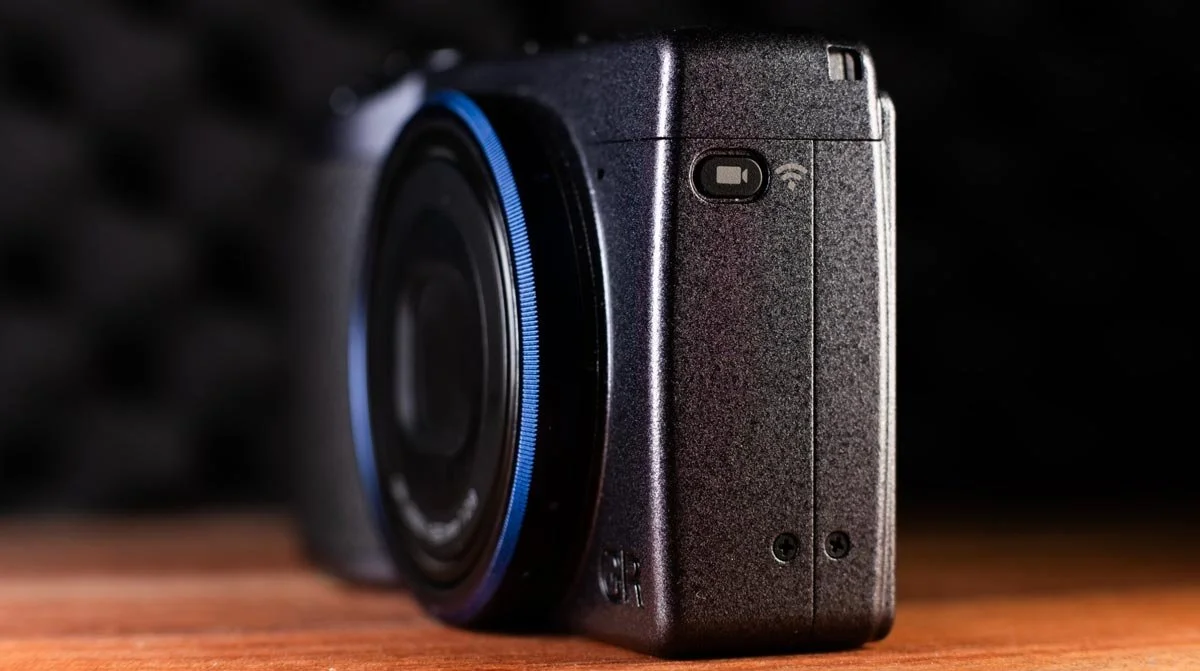
    Consider whether you prefer a fixed lens or an interchangeable lens system. Fixed lens cameras like the Fujifilm X100 series or Ricoh GR3 and Ricoh GR3x are popular among street photographers for their simplicity and compact size. If you opt for an interchangeable lens system, prime lenses in the 28mm to 50mm range are commonly used for street photography. My favorite focal length is 40mm. It is a good compromise between a wide angle and a standard lens. 

    Autofocus and Responsiveness

    Fast and accurate autofocus is crucial for capturing fleeting moments on the street. Look for cameras with fast AF systems and minimal shutter lag. Some photographers also appreciate zone-focusing capabilities for even quicker shooting. Do not forget that manual focusing is also an option. 

    Ergonomics and Controls

    A camera that feels comfortable in your hands and has intuitive controls is essential for street photography. Look for models with easily accessible manual controls and customizable buttons.

    Low-Light Performance

    Street scenes often involve challenging lighting conditions so that good high-ISO performance can be beneficial. This is where larger sensor cameras often have an advantage.

    Silent Operation

    A quiet shutter can be invaluable for discreet shooting. Many modern cameras offer silent electronic shutter modes, which can be particularly useful for street photography.

    Weather Sealing

    If you plan to shoot in various weather conditions, consider a camera with some level of weather sealing to protect against light rain and dust.

    Budget

    Street photography cameras come in a wide range of prices. While high-end options like Leica cameras are popular among some street photographers, there are excellent choices at every price point. Remember that the most expensive camera isn’t necessarily the best for your needs.

    Some cameras that are widely used for Street Photography 

    The Fuji X100-series is a very popular camera among street photographers. Fuji X100-series compact cameras combine retro styling with cutting-edge technology, making them a joyous and powerful tool for capturing street scenes. The Fuji X100VI is the latest model. The earlier model might not have all the newest features, but they are still quite a good option. The Fuji X100V camera is still worth considering.

    Other popular cameras are the Ricoh GR3 and GR3x. The GR3 model has 28mm lens (equiv. in FF terms) and the GR3x has a 40mm lens (equiv. in FF terms). This compact camera easily slips into a pocket yet delivers image quality that rivals larger cameras. The GR III’s Snap Focus feature is handy for street photography, allowing you to preset focus distances for rapid shooting.

    Leica Q3 is probably the best choice for a high-end camera. Leica Q3 delivers unparalleled image quality and a shooting experience that many photographers find deeply satisfying. 

    My camera choices

    I mainly use Ricoh GR3x and Fuji X-M5 cameras for street photography. I have an XF27mm F2.8 lens on my X-M5. 

    Conclusion

    Ultimately, the best camera for street photography is one that you enjoy using, and that doesn’t get in the way of your creativity. Whether you choose a compact point-and-shoot, a mirrorless system, or even a smartphone, what matters most is your eye for composition and your ability to capture compelling moments on the street.

    Remember, many great street photographers have created iconic images with various cameras. Focus on developing your skills and finding a camera that suits your style and workflow. With practice and the right tools, you’ll be well-equipped to capture the vibrant energy of the streets.


  • DxO Black Friday Deals

    DxO Black Friday Deals

    DxO has some great Black Friday Deals again. I promised in my video that the prices would be on my blog. The Black Friday Deal is valid from Nov. 22nd until Dec. 1st, 2024

    Here is a link to DxO Black Friday deals.

    DxO PhotoLab 8

    • New customers: Save $49! Now $179.99

    • DxO PhotoLab 6 or 7 owners: Save $19! Now $89.99

    Nik Collection 7

    • New customers: Save $49! Now $109.99

    • Nik Collection 5 or 6: Save $14! Now $74.99

    DxO ViewPoint 5

    • New customers: Save $19! Now $89.99

    • DxO ViewPoint 4 owners: Save $9! Now $59.99

    DxO PureRAW 4

    • New customers: Save $29! Now $89.99

    • DxO PureRAW 2 or 3 owners: Save $14! Now $64.99

    DxO FilmPack 7

    • New customers: Save $69! Now $69.99

    • DxO FilmPack 6 owners: Save $19! Now $59.99